One of the most underrated positions that can utilized to build core strength and overall stability in your dog’s body is the simple: Stand. The Stand position is a dog’s version of a Plank position for a human.
Did you know that most dogs can not sustain a Stand position for any duration of time? They will almost immediately default into a Sit. Why? Ever hear that phrase, use it or lose it? We must target and condition specific muscle groups in order to build strength.
We tend to associate the front and rear legs as the main muscles to focus on in k9 exercise because they are a dog’s primary movers. Many owners and dog sport enthusiasts want a powerful and muscular dog, which is why they focus primarily on the shoulders, front and rear legs. The truth is, we often forget about the important bridge that connects the front and rear of a dog – the core. The importance of the core is to provide efficient front and rear limb work. If this system (abdominals, lower back) is not efficient, your dog is extremely vulnerable to a host of potential injuries because the body is not going to be able to respond to all of the high demands placed on it while our dogs during intense movements such as running, jumping, pivoting and turning; yet core muscles and stabilizing muscles are extremely under-utilized in the day to day activities of the average pet dog.
Why is core strength important for every dog?
- The core is the dog’s center of gravity and it is essential for your dog’s overall balance
- Decreases incidence of injuries associated with osteoarthritis and other soft tissue issues.
- Supports and protects the back muscles, which in turn supports the entire body.
- Stabilizes lower back, allowing the pelvis, hips and lower back to work together smoothly
- Enhances flexibility
- Improves performance, coordination and posture in everyday activities like obedience commands, dog sports, playing fetch, playing tug, jumping on / off furniture and more!
What are stabilizing muscles?
Stabilizing muscles allow for optimal / smooth movement in everyday activities and exercises. So, the front end of the dog (shoulders, neck and chest) plays the largest role in stabilizing the body while the rear legs (hips and knees) prepare to re-engage for continued movement. These are the muscles that are key to balance, navigation and agility and that is why conditioning these stabilizing muscles are so important for every dog.
How can you use the Stand position as a fitness exercise? Just like the Plank, correct position is directly correlated to the effectiveness of this exercise. You first want to focus on shaping the correct position.
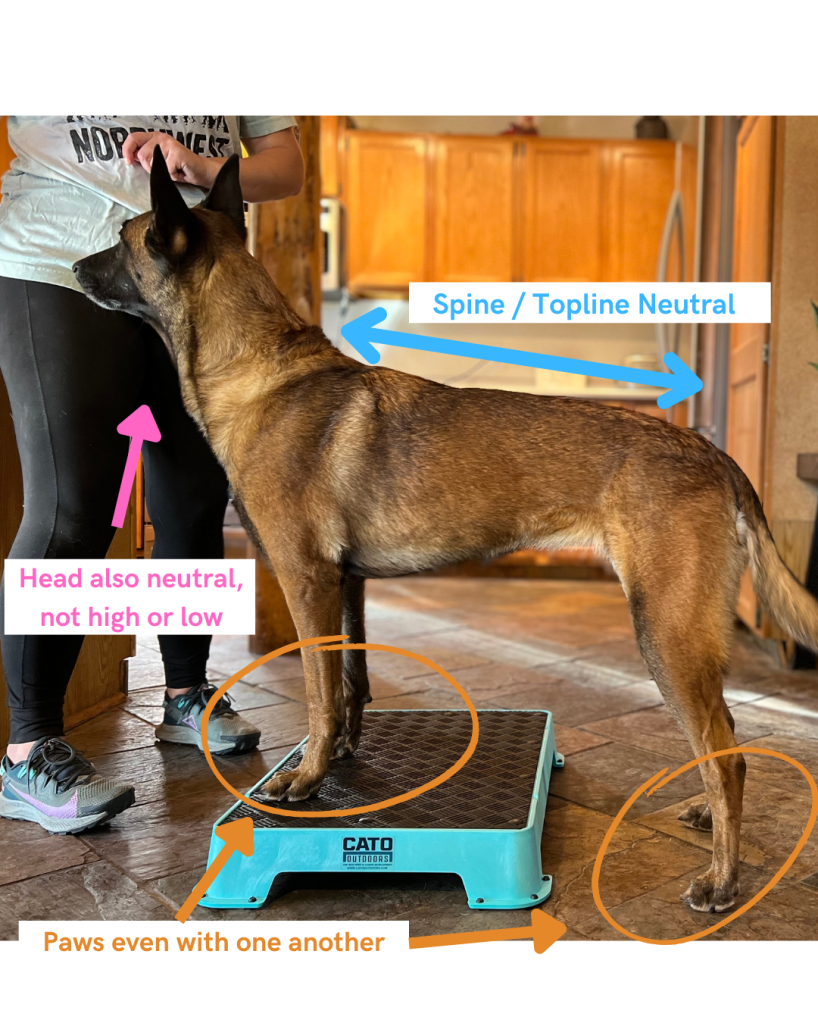
To shape the Stand position for K9 Fitness, you NEED to:
Have both their front and back paws, even. If there is one paw in front of the other, then they are not evenly distributing their weight and utilizing leg muscles to hold the stand position rather than engaging their core.

Create a neutral topline / spine meaning that the spine is straight. An uneven topline happens when the dog’s legs are tucked under their abdomen creating a curve in the dog’s spine. This position does not engage the core or stabilizing muscles.
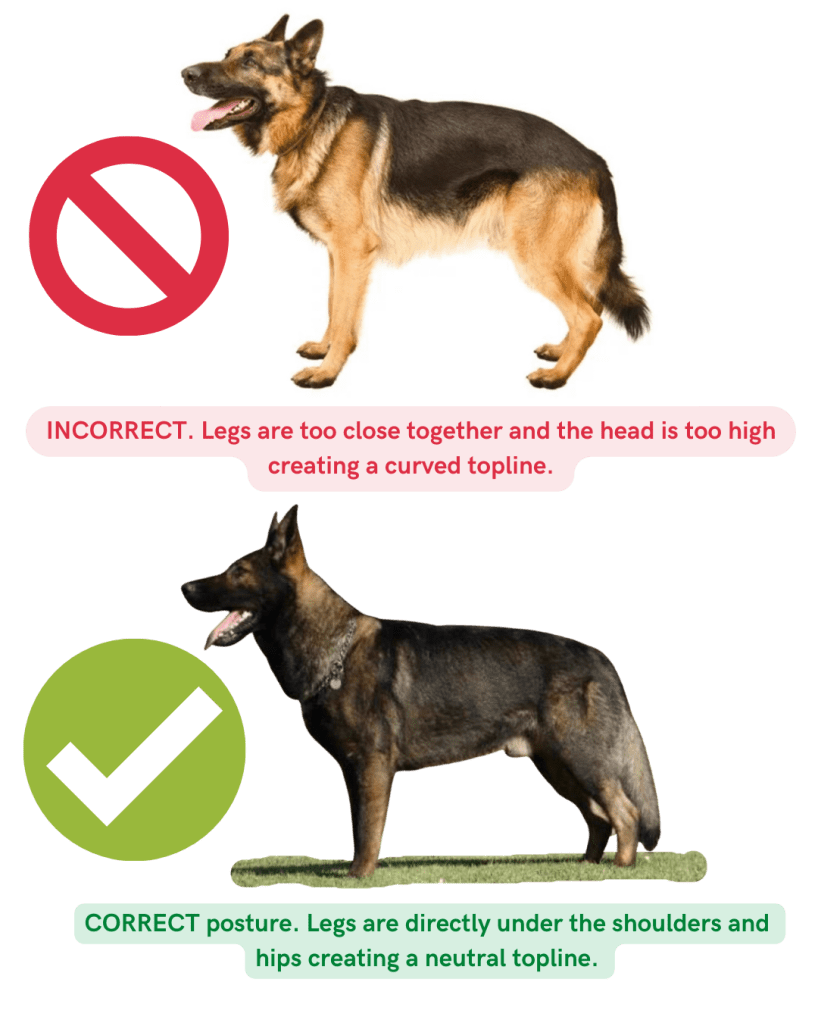
Make sure their head is also in a neutral position, not low and close to the ground or high and facing upwards.
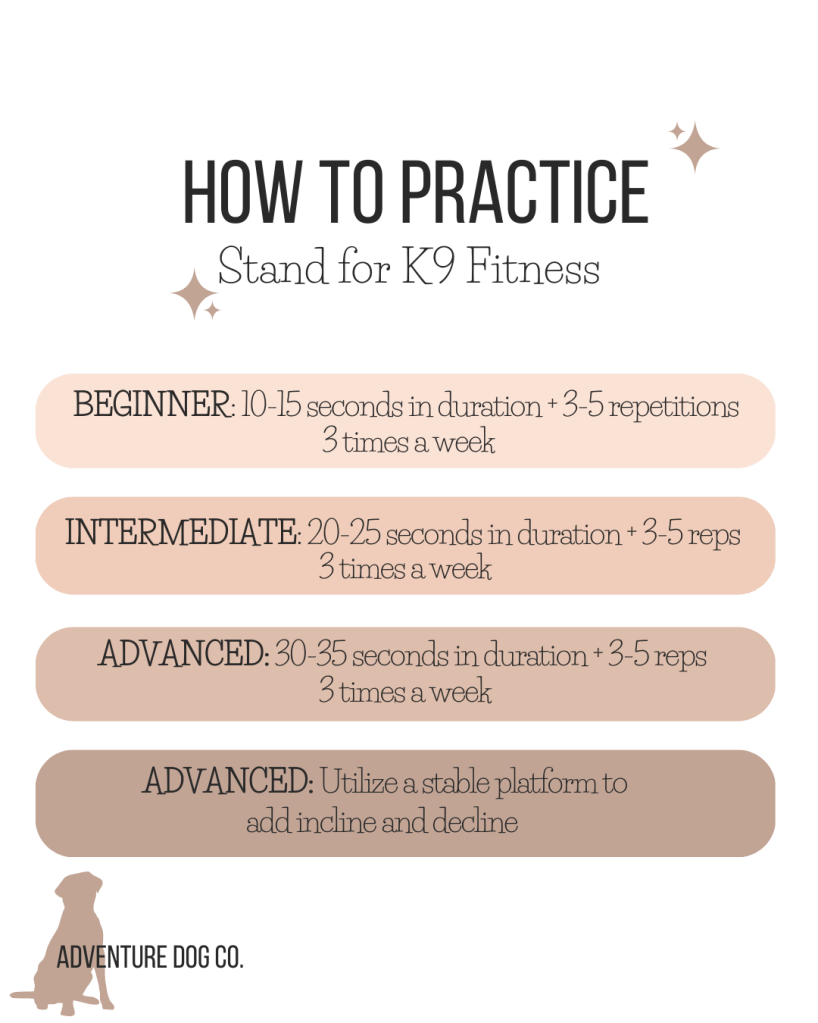
Once you are reliably getting the correct position for Stand, you want to start building duration and repetitions in that position.
Implementing k9 fitness into your dog’s exercise is a great way to:
- Prevent potential injuries
- Work your dog’s body and brain
- Meet your dog’s exercise needs INDOORS
- Add variety to your dog’s exercise regime
Trained dogs have more fun! Don’t forget to check out our sticker shop for inspiration!
 Training Adventure Dogs
Leave a comment