I truly believe that a key component to having a happy dog – is health; because healthy dogs feel their best! In today’s world, there are countless options when it comes to commercial dog food brands and yet every company claims to be “the best”. No matter what your monthly budget for your dog’s diet, my goal is to help and inspire you to make small changes that will have a big impact on your dog’s overall health!
How does your dog’s diet directly correlate to their overall wellness? Your dog’s diet directly affects nearly every aspect of your dog’s life… from their skin and coat to their behavior, from dental health to life expectancy to their everyday energy level.
What does a balanced and healthy canine diet look like?
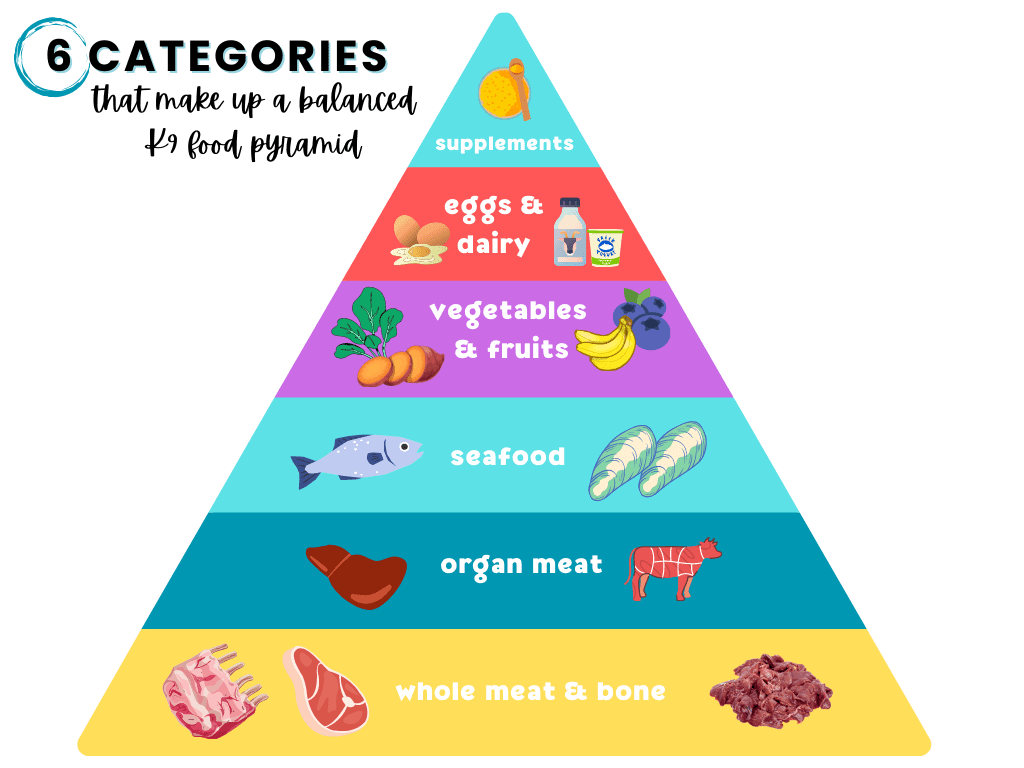
- The largest ingredient that should make up your dog’s diet is: Whole Meat & Bones. No matter what, your dog is carnivore and the majority of your dog’s nutritional needs are met through simply feeding a high animal protein diet. *Ideally, you want to rotate animal protein sources every 3-4 weeks to ensure that your dog gets the proper nutrient levels that they need*
- Organ Meat: Organ meat is the most nutrient dense meat that you can feed your dog. Liver, specifically, is a staple in canine diets, providing a variety of essential vitamins and therefore should always be a part of your dog’s protein consumption.
- Seafood: Fish, mussels and oysters are all excellent sources of essential nutrients like zinc and manganese. *sourcing canned fish in WATER, dehyrated mussels or frozen fresh seafood are all great options to rotate into your dog’s diet*
- Vegetables & Fruit: Green veggies, starchy veggies and blueberries provide antioxidants, fiber and other nutrients but should make up less than 10% of your dog’s diet. *blend or cook veggies to provide optimal absorption*
- Eggs & Dairy: Eggs are a wonderful source of protein and fat and an extremely underrated superfood. It is safe to feed raw or cooked WHOLE eggs almost daily! Dairy products such as goat’s milk, keifer and plain non-fat greek yogurt are great sources of probiotics that greatly benefit your dog’s overall gut health. *this should make up less than 2% of your dog’s daily diet*
- Whole Support Supplements: If you feed a primarily commercial diet, aka: kibble, then adding in daily support supplements are essential because kibble will only ever contain synthetic vitamins and minerals. But, NOT ALL SUPPLEMENTS are created equal. Stay away from chewables and flavored supplements that have unhealthy additives like brewer’s yeast – and often times, the chewables are sourced from synthetic vitamins and minerals which are not digestible to canines and therefore a literal waste of money. Stick to whole ingredient supplements! *supplements in the form of powder or tablets are best*
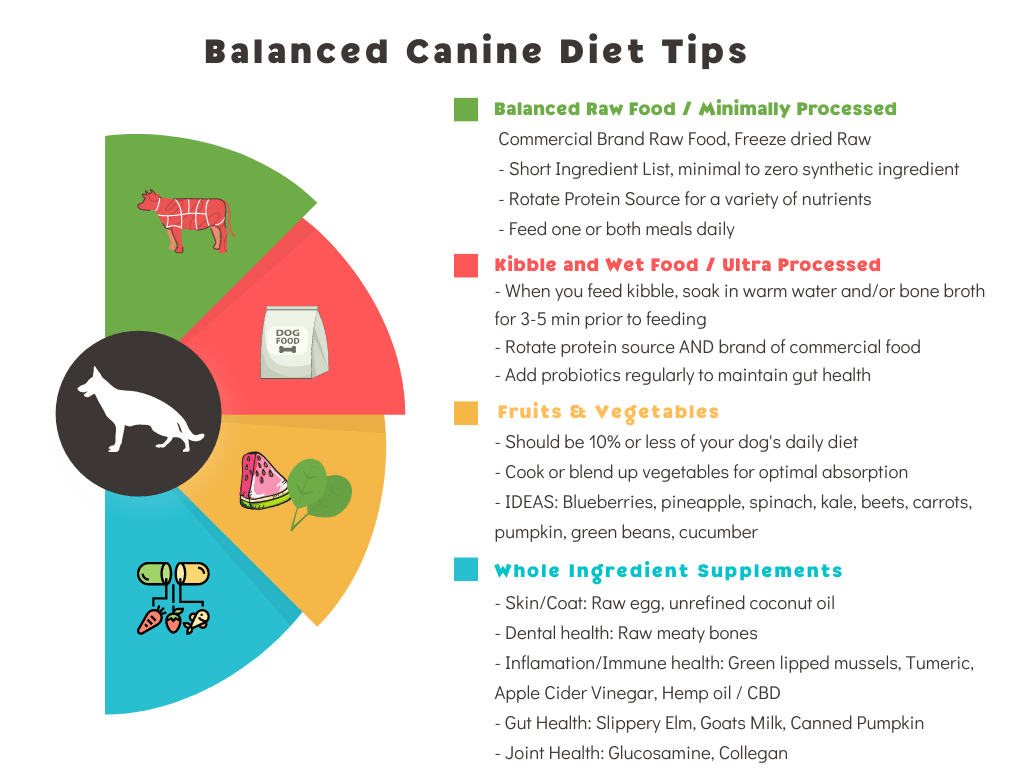
If you feed a raw diet, it is crucial to ensure that you are feeding all 6 categories to create a balanced diet. If you feed a commercial raw food, meaning that you purchase your frozen raw, double check the ingredient list so that you know your dog is consuming a balanced diet.
If you feed a commercial diet, aka: kibble and/or canned food there are 3 simple things that you can do to help your dog feel their best on an ultra processed diet!
- KNOW WHAT YOU ARE FEEDING YOUR DOG. The price tag of your dog food does not equate to the quality. Take the time to read the ingredient list because that is the ONLY thing on a dog food bag that the FDA regulates. The “highlights” on the bag are almost always inflammatory marketing schemes. Look for:
- At least 3 of the first 5 ingredients should be MEAT (not meat by-product. If a protein “meal”, you still want 1-2 of the top 5 ingredients being a whole meat)
- You WANT to see whole vegetables, whole fruits and whole supplements named on the ingredient list. (Avoid “natural flavors”)
- Find the Salt! The ingredient list, by law, must go in order of largest to least and the FDA determined that salt MUST be 1% or less in any dog food…. SO – find the salt on the list and you will know that any ingredient AFTER that is also 1% OR LESS of the total ingredient list
- DO SOME SIMPLE MATH. Take two minutes and add up the following percentages found in the “Guaranteed Analysis”. You WANT the following 5 percentages to add up to a minimum of 50% or higher!
- Crude Protein %
- Fat %
- Moisture%
- Fiber %
- Ash% (if listed)
- Whatever this adds up too, the remaining percentage is ALL carbohydrates. (Look at that pyramid again… do you see carbs listed as an essential food group for dogs? You do not want half or more of your dog’s diet being made up of un-essential food)
- BOOST YOUR DOG’S MEALS. Determine your budget, find ways to help add-in whole food ingredients that will make your dog’s meals healthier and more balanced and healthy. I have ideas on how to start boosting your dog’s meals throughout this post.
Weight & Hydration
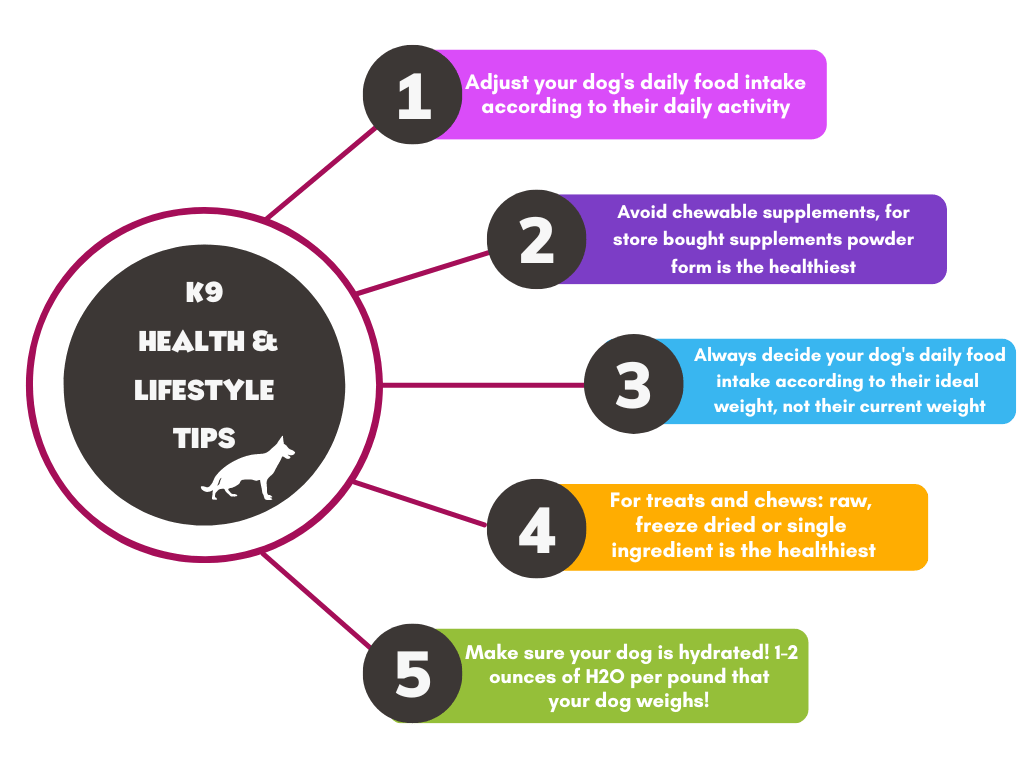
Obesity is an epidemic in America today amongst pet dogs and unfortunately, obesity is a direct contributor to numerous canine health issues and physical injuries; as well as your dog’s life expectancy. Love your dog by ensuring they maintain a healthy weight. Two easy ways to fight against weight gain are:
- Adjust your dog’s daily intake of food according to the exercise they received that day! For example, I always feed my Labrador 1 cup of food in the AM but will add or subtract food from his PM meal according to the exercise he received that day
- When figuring out how much you should feed your dog – focus on your dog’s IDEAL WEIGHT, not their current weight. For example, if you look at the suggested feeding guide and your dog is currently 60lbs, but they should be 55lbs… follow the feeding suggestion for a 50-55lb dog
Another unfortunate contributor of canine obesity is unhealthy, carb filled and low quality treats like milkbones, Greenies and rawhides. Now, we all love to give our dog treats – so here are some easy ways to utilize healthy dog treats that will AID in your dog’s overall HEALTH:
- Use freeze dried or dehydrated dog food (I.e. Rawwble, Rawnibs, RealMeat brand) as training treats
- Only feed Single ingredient chews and bones as treats. For example, dehydrated ears, tracheas or chicken / duck heads – bully sticks, knuckle bones, dehydrated fish and fish skins, frozen meaty marrow bones and freeze dried liver
A hydrated dog is a healthy dog! Make it your daily mission to ensure that your dog stays hydrated because water is the most important ingredient in every dog’s diet! It aids in their digestion which helps with preventing weight gain, health issues and more! How much water does my dog need each day? Simple! 1-2 ounces of water per pound your dog weighs on average. Double that if your dog has a high activity day! For more information on the importance of water, check out our water blog post!
I sincerely hope that this helps give you some ideas and inspiration on small changes that you can make to help your dog feel their best each and every day!
 Training Adventure Dogs
Leave a comment