Training is the language that you speak to your dog. Dogs, like every other creature on the planet, will always choose the path they believe will be the most rewarding. Training gives you the opportunity to convince your dog that the choices you want them to make are the most rewarding and as a result you will see your dog exhibit the behaviors and commands you desire.
Training teaches you that the behaviors your dog exhibits are a direct result of what you allow, what you reinforce and what you enforce. We believe that LOVE is an action word and that the happiest dogs are the most confident, healthy and fulfilled dogs. We focus on teaching you to love your dog by leading them with 4 key elements:
- Leadership
- Consistent Structure / Rules at home and in your dog’s daily life
- Clear Communication (Rewards and Training Equipment)
- Meet your dog’s daily physical and mental exercise needs

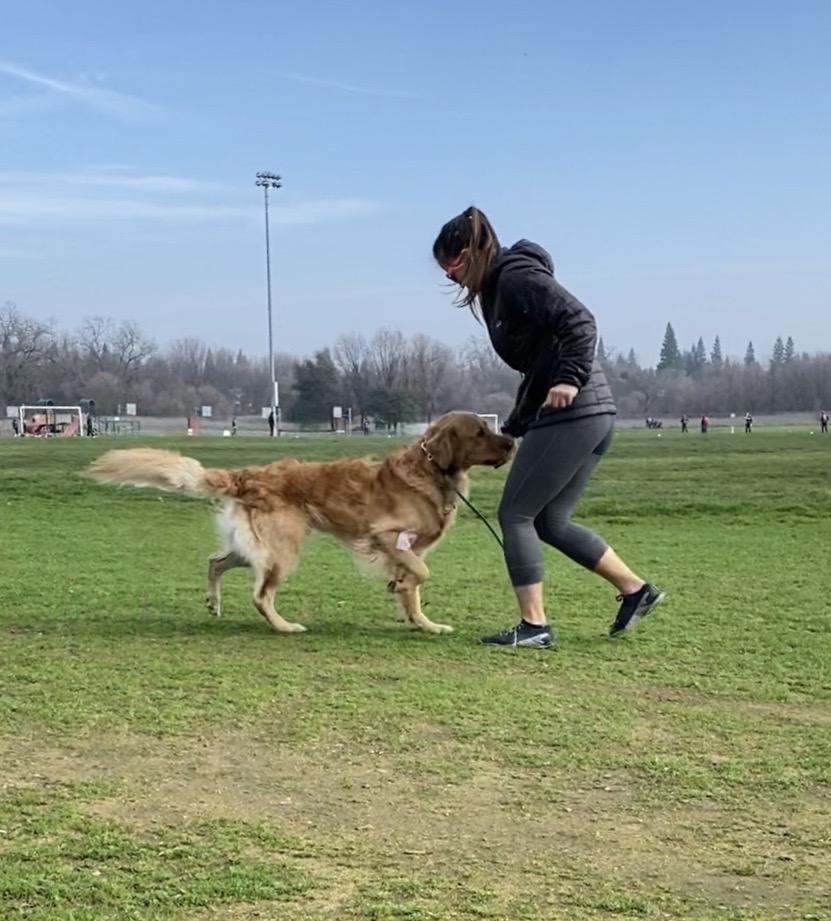
1.Empowering you to be an effective leader
What is leadership? Leadership is having clear rules, clear structure and clear consequences. Dogs thrive when they know what is expected of them and when the rules are consistent. Good leaders are not born, they are made through putting in consistent effort to help your dog thrive. Being a good leader simply means to use your everyday interactions with your dog to provide guidance. This means putting yourself directly in the path of everything that your dog wants. The food, the toys, the personal interactions that you offer and the behaviors that you expect in return – all become the sum of your relationship.
Being an effective leader for your dog is how:
- You strengthen your bond
- prevent unwanted behaviors
- Lessen any anxiety or stress in your dog’s life
- Sets your dog up for long term success
- Builds your dog’s confidence
- Earns your dog’s respect
- Makes you valuable to your dog
- Makes you FUN to your dog
- You become the person your dog relies on and looks too for guidance whenever they are not sure about a situation or environment
2.Consistency and Clarity in your Structure
Structure is simply creating rules and boundaries in your dog’s everyday life. These are essential for the mental health of your dog as well as implementing daily leadership and manners. We do this 4 ways:
- Threshold Manners: front door, backyard door, car door, crate door, etc.
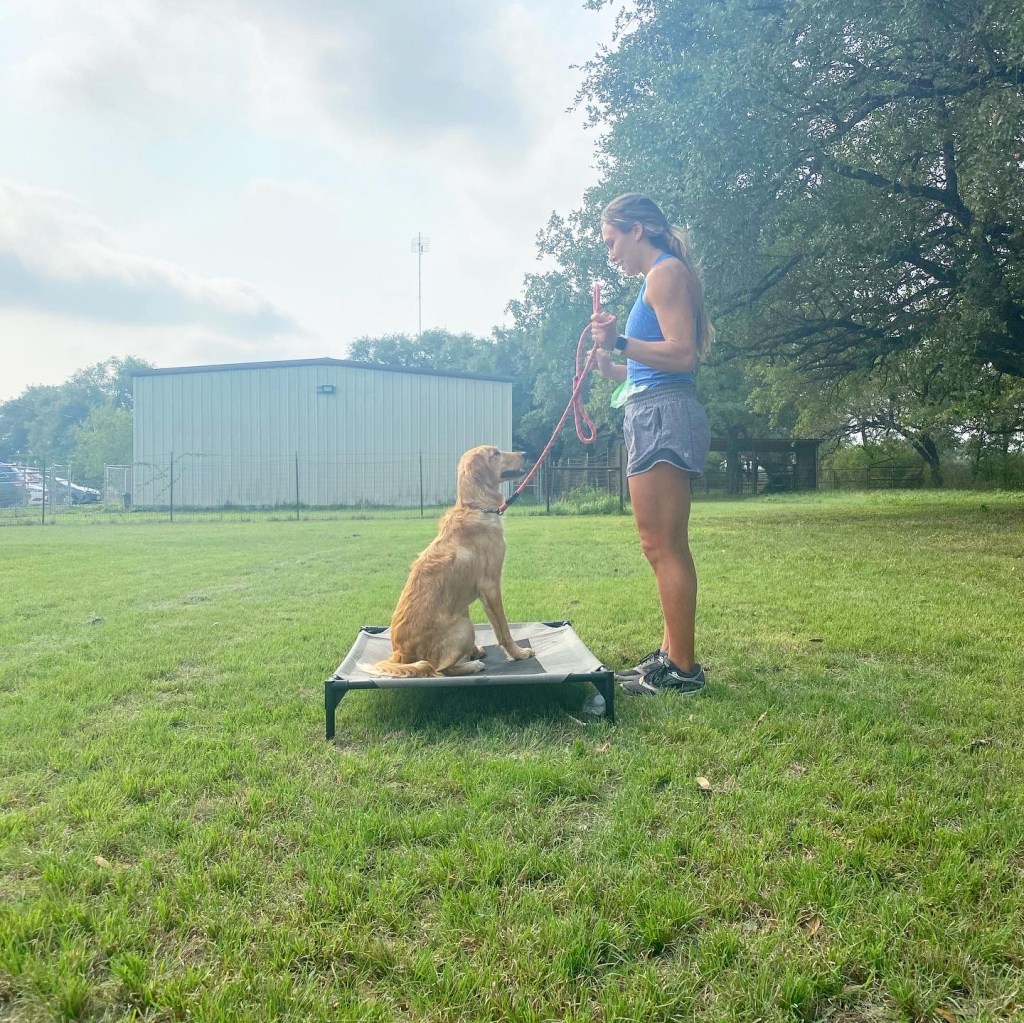
- Place Command (or Tethered Place)
- Balanced Respect: Teaching our dog that they give us something to get what they want. Examples; Sit to get their meal – Sit and remain seated to be leashed for a walk – If your dog is allowed on furniture, it is a lay Down area only (no playing, running or barking on the furniture)
- Training Tools: setting your dog up for success in being well mannered regardless of the distractions or environments. Examples; Your dog begs for food at dinner = Place Command – Not sure if your dog will have a polite greeting = leash – Want to allow your dog off leash in public or at home = always have the remote collar or long line on to keep them safe and reliable
3.Clear Communication
In order to build reliability and confidence in your dog’s commands; follow ONE SIMPLE RULE: do not give a command unless you can ENFORCE (decrease behavior / training tools) or REINFORCE (increase behavior / rewards) the command. This is the definition of balanced training. Utilizing your training tools daily gives you a way to effectively and reliably communicate with your dog.
The truth is that dog training isn’t solely about your dog’s behavior. It is about your habits. At times, it’s going to force you to take and tough and honest look at how you interact with your dog and what you believe about your relationship with your dog and know that having clear communication will do nothing but enhance your relationship.
4.Meet your Dog’s Needs
Many of the behavioral issues we see in client dogs is a result of a lifestyle where the most physical and mental energy is being invested in less than ideal events (like the dog park). Giving your dog healthy physical and mental outlets instead is so important. Unwanted behaviors pop up when a dog is bored or frustrated and a dog who is bored is one that is not getting their needs met. Have a puppy? Creating good habits when they are YOUNG will set you and your dog up for long term success and prevent unwanted behaviors that so many dog owners struggle with. The best way to do this is to have a variety of ways to exercise your dog physically and mentally. Here are some of our top favorite exercises:
- Treadmill (minimum 30 min / maximum 65 min)
- Obedience Commands Practice w/Tug Play or Fetch as the Reward
- Fun Object Challenge: Finding stable and appropriate objects in public and at home to utilize for confidence building and fun exercise. Examples:
- AT HOME: a ladder laying on the ground, crawling under a dining room chair, a stable bucket, human fitness equipment such as a bosu ball and more!
- IN PUBLIC: a park bench, picnic table, a kids playground, a fallen log, a rock, a stump, a short retaining wall and more!
- Canine Fitness Exercise Session
- Structured Walk w/obedience practice & Fun Object Challenge incorporated
- Working for their Daily Meals via food toys, frozen food toys, food puzzles, training sessions
- Off Leash Adventure incorporating Obedience practice & Fun Object Challenge
The secret recipe to a well mannered dog starts with you and small changes can yield big results if you’re willing to be consistent – and trust me when I say, your dog will thank you because trained dogs have more fun!
 Training Adventure Dogs
Leave a comment